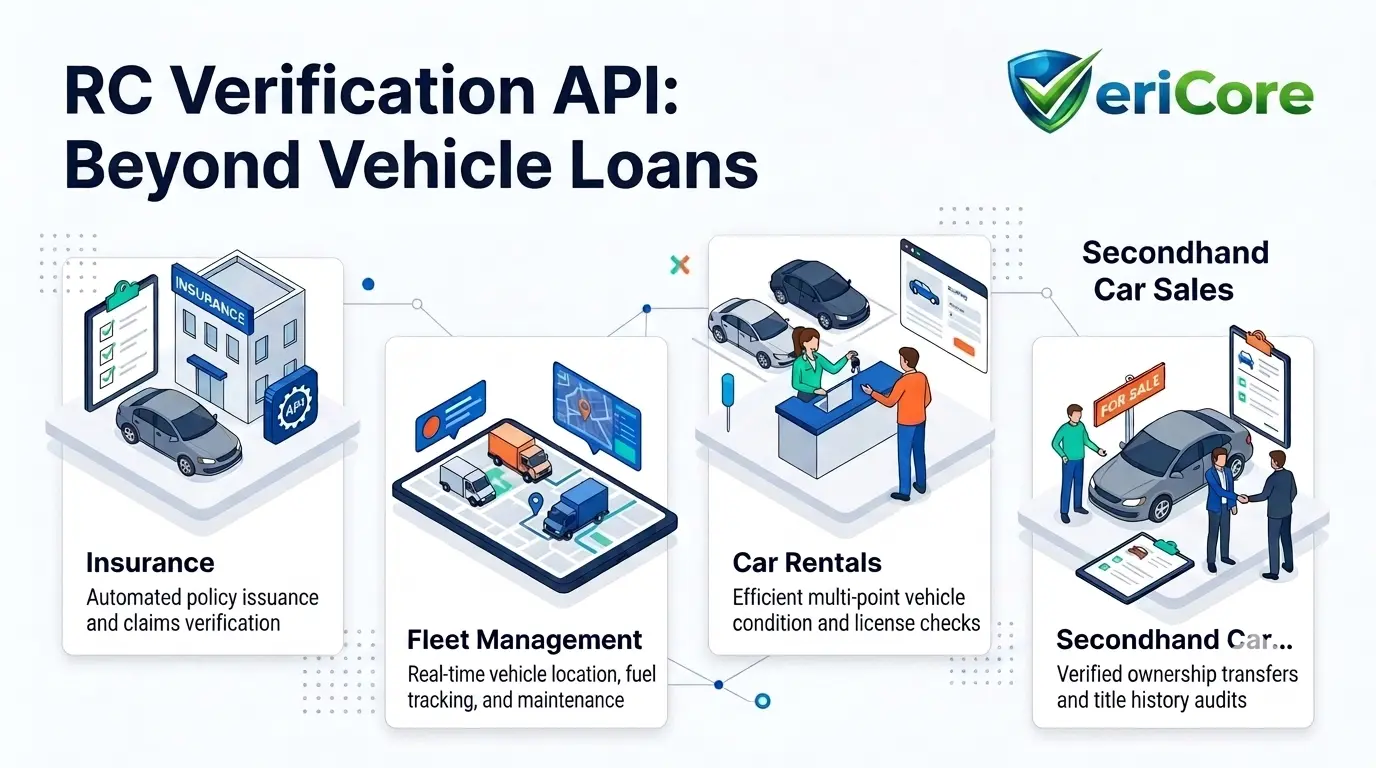

Ask most people what “RC verification” means and they’ll describe a bank checking a used-car loan before it pays out. That’s fair. Lending is where RC checks got most of their early adoption in India, and vehicle lending itself is the reason why. Used-car loans are the fastest-growing segment of India’s vehicle finance market, at a 26.2% five-year compound annual growth rate. The borrower base is up 2.4 times over the same period. Every one of those loans is only as sound as the RC backing it.
But a registration certificate is the anchor document for every vehicle on the road, not just financed ones. Any business that takes on risk tied to a vehicle it doesn’t own is exposed to the same failure modes a lender is. Fleet operators, dealership networks, rental platforms, and logistics companies all carry that risk today, mostly on trust, a phone call, or a photocopy.
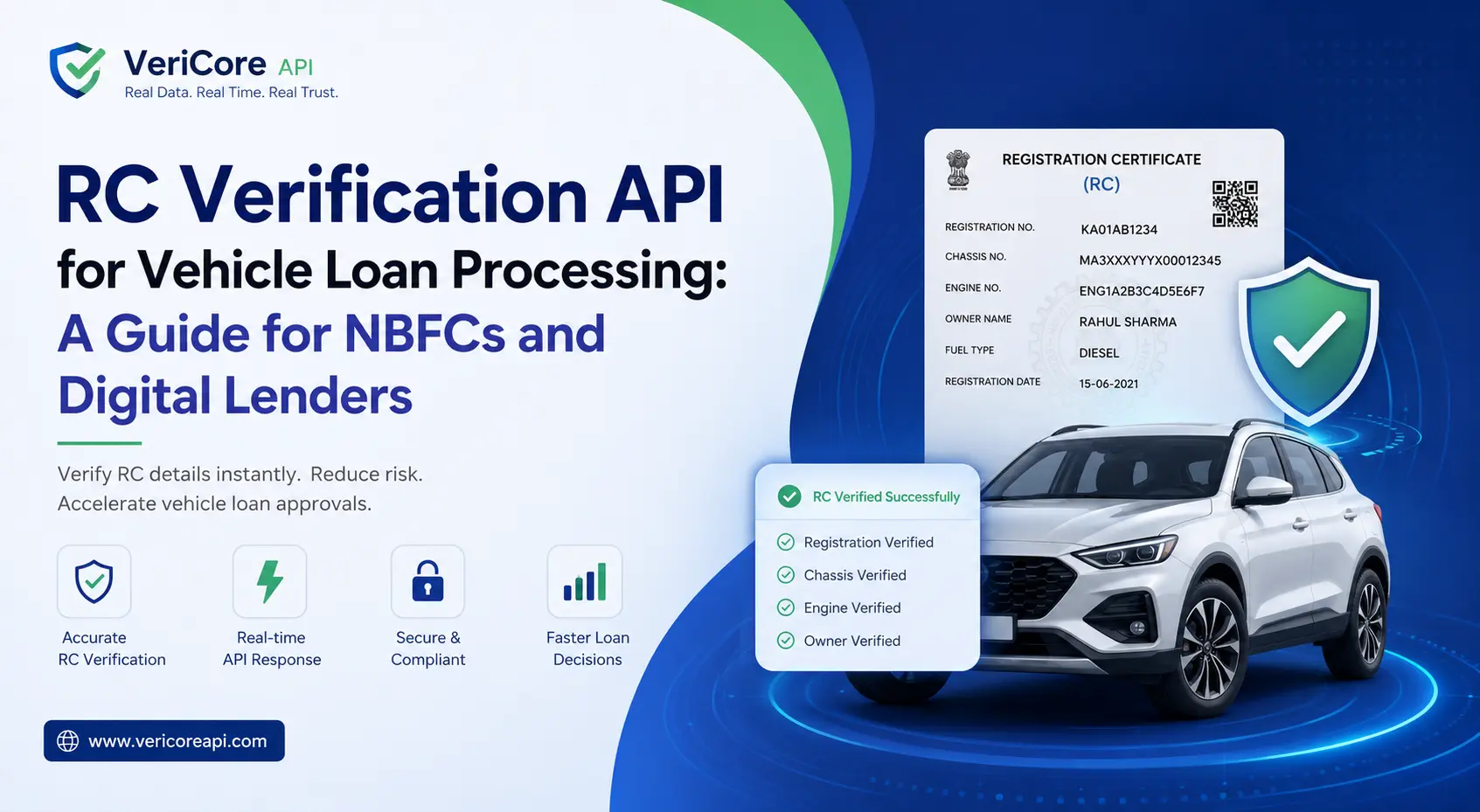
A registration certificate records who owns a vehicle, what class it’s registered as, whether its fitness and insurance are current, and whether a financier still holds a hypothecation on it. A business that skips this check before onboarding a vehicle is exposed on three fronts: the vehicle isn’t what it’s claimed to be, the person presenting it isn’t the registered owner, or it carries a lien that makes it someone else’s problem the moment something goes wrong.
Paper doesn’t settle any of that. In one case reported this year, a Bilaspur trader sold a stolen SUV for Rs 14 lakh using a registration certificate with the wrong chassis and engine numbers . The buyer had already taken an Rs 11.5 lakh loan against it before police confirmed the vehicle was stolen. The RC looked fine until someone checked it against the government record.
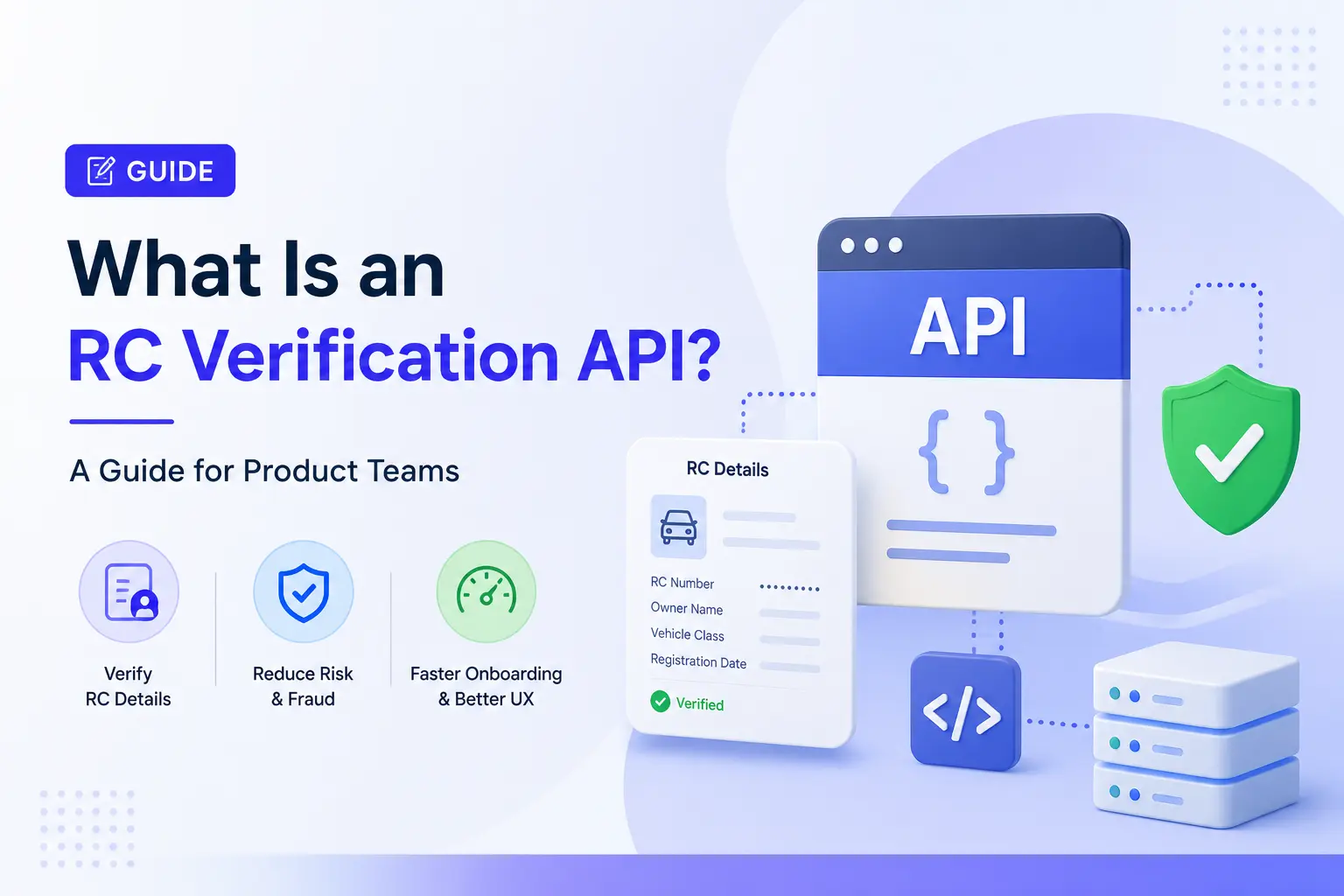
An RC Verification API is that check. Feed it a registration number or a chassis number, and it returns the current record straight from RTO data, not whatever’s printed on a card.
Fleet operators leasing from owner-drivers, or onboarding third-party vehicles onto a platform, are running an underwriting step without calling it that. A vehicle with a lapsed fitness certificate or an active hypothecation has no business going live, but a fleet manager confirming this by phone or an RTO visit is adding days to every onboarding. An RC check for fleet onboarding closes that gap in one call.
The fix mirrors what lenders already had to build: confirm class, fitness validity, and ownership through an API call at the point of registration, before a route or driver is assigned. For a platform onboarding hundreds of vehicles a month, that turns a multi-day queue into same-day activation.
More of that used-car lending runs through dealership floors than ever, given the borrower-base growth cited above. That means more RCs carrying an active or recently closed hypothecation entry passing across the trade-in desk.
For a dealership, dealership vehicle verification closes that gap in two places. At the service counter, a lookup that matches the walk-in customer to the registered owner catches unauthorised servicing and warranty claims filed by someone who isn’t the owner. At the trade-in desk, the same lookup confirms a vehicle is free of hypothecation before a valuation goes out, which is the step the Bilaspur case above skipped.
Marketplaces that let owners list their own vehicles, car rental, bike-sharing, cab aggregators, inherit whatever risk sits inside that listing. A stolen vehicle, cloned registration details, or a lapsed permit can put a renter in a car the platform never should have approved in the first place. Rental vehicle verification at listing time closes that gap before the first booking.
Three things an RC check confirms at listing time:
Pair this with a driving license check on the person doing the renting or driving, and both halves of the liability question are covered before keys change hands.
Freight platforms routing shipments through a partner fleet, rather than owned trucks, take on liability the second a vehicle picks up cargo under their brand. A truck on an expired permit or a lapsed fitness certificate becomes the platform’s problem the moment something goes wrong mid-route, not the truck owner’s. Logistics vehicle onboarding needs the same check a lender runs, just triggered at a different point in the workflow.
An RC lookup at onboarding catches most of this early. What catches the rest is a scheduled re-check, run monthly or quarterly across the full partner fleet, since a truck that passed inspection six months ago isn’t guaranteed to still be compliant today. For a platform managing thousands of partner vehicles, that batch run is a lighter lift than chasing paperwork from individual drivers one at a time.
| Business | Who runs the check | When |
|---|---|---|
| Lender | Credit risk | Before disbursal |
| Fleet | Operations | Before onboarding |
| Dealership | Service desk / trade-in team | At the counter |
| Rental platform | Trust and safety | At listing |
| Logistics | Compliance | Before route assignment |
What changes across these five isn’t the check. It’s who owns the decision and how often it needs repeating. A single lookup covers a one-time onboarding. A portfolio of financed or partner vehicles needs the same check run again on a schedule, since a clean record today doesn’t stay clean forever.
Most businesses start with one of these use cases and expand once other teams see what it catches. A dealership that starts with trade-in checks often adds service-counter verification within a quarter. A logistics firm that starts with partner onboarding usually adds scheduled re-checks the first time a lapsed permit turns into a claim.
VeriCore’s RC Verification API pulls current registration data directly from official transport authority records. Search by registration number or by chassis number, and one call returns owner details, vehicle class, fitness and insurance validity, and hypothecation status.
That’s one integration covering what a fleet, a dealership, a rental platform, and a logistics firm each need at onboarding, instead of building four separate checks for four separate teams.
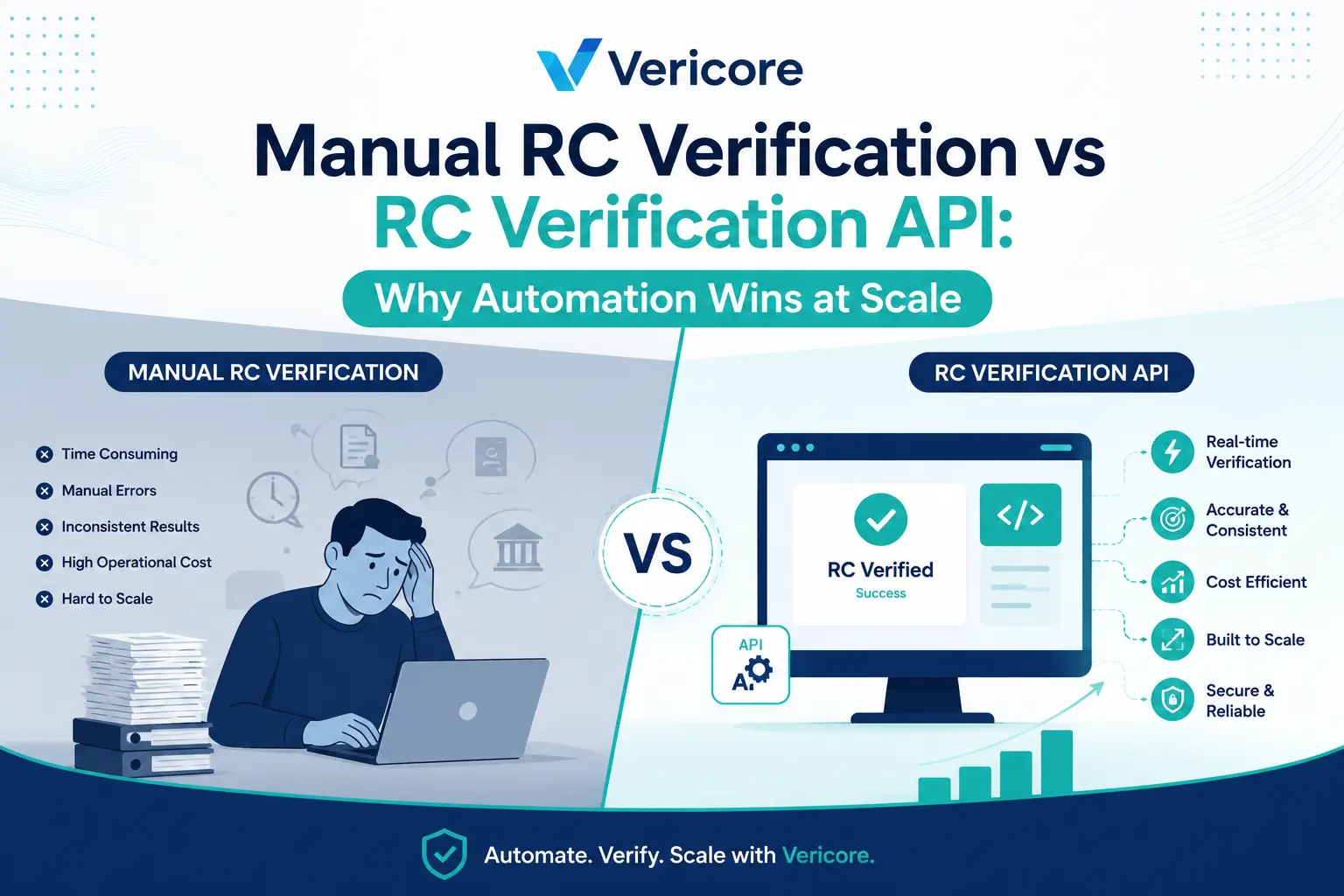
If your business still verifies vehicles by phone call, photocopy, or manual RTO lookup, request access to the RC Verification API and put every one of those checks through a single API call.
No. Any business that takes on risk tied to a vehicle it doesn't own can use it. That covers fleet operators, dealership networks, rental and mobility platforms, and logistics companies, not just lenders.
A standard response includes the registered owner's name, vehicle class, fitness certificate validity, insurance validity, and hypothecation status, pulled directly from official transport authority (RTO) records.
Dealership vehicle verification catches two problems lenders don't see: unauthorised servicing by someone who isn't the registered owner, and undisclosed hypothecation on a trade-in vehicle before a valuation is offered.
Yes. An RC Verification API accepts either the vehicle registration number or the chassis number as the search key and returns the same registration record either way.

VeriCore offers fast, secure APIs for vehicle RC, driving license, Aadhaar, and PAN verification — helping businesses onboard and verify users with confidence.